Posts tagged with: position paper

position paper

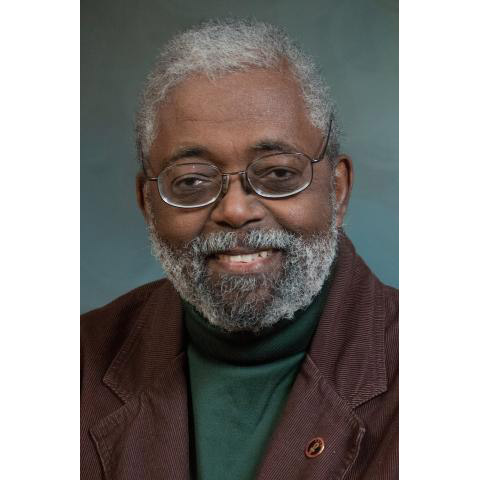
From Professor Richard Stewart’s Blog: This post is the third and final individual response to the Position Paper written by the Parish Council of Holy Family Lutheran Church, Chicago, IL. The first response is by Lee Wesley. The second response is by Massie L. Kennard. It is also Professor Stewart’s first general publication not written for a class or a grade.

LUTHERAN QUARTERLY Nov. 25, 1967 – 3rd Response

Richard Stewart, First Publication

BLACK Power is the organization of the American Negro as a bloc to gain economic status, to exert political power, and to become the “new immigrant” force in America. It must also be understood that this is not the only definition for these two words.

Black Power can easily be misinterpreted by defining it in terms of violence. With this as a definition both Negro and white find themselves worried about the possible consequences of open conflict. There is a tendency to feel threatened by change. One know what effect there will be on his position, his life, or family and friends. People are forced to face challenges, but they do not think about the presence of God in today’s historical events. Black Power has been and still is challenging to Negro and white.

The social and political issues, brought forth by Black Power advocates, are the same issues that the Negro has asked before to be solved (education, employment, housing, and economic independence). The powers, which could have brought about a change, are the same ones which are now making slow progress. The church has been a definite part of that power wielding group, then and now. The people, who are the body of the church, have set standards by which other members are looked upon, and the church then takes on the characteristics of its members in thought, word, and deed. The church gathers its identity from the peer group, rather than from God, the eternal Father.

Our church must break out and look at all people as part of the community of God. Those events which surround all people, like Black Power does today, must be analyzed and concrete actions taken to respond out of love to all people and their situations. Right now we must interpret Black Power and speak out about its challenges, and, if possible, we must give resolutions for the settlement of problems. We must become twentieth century prophets.

Being a Christian in the Lutheran church, a theological student, and a Negro forces me to view Black Power from different colored glasses than those of my contemporaries. To put my views on a practical plane, I refer to three points used in an address delivered by Cameron Wells Byrd, pastor of Christ United Church of Christ, Detroit, and Executive Director elect of the Ecumenical Center in Roxbury, Inc., Roxbury, Mass., to the Youth Division of the National Council of Churches in the United States, meeting in Detroit, Michigan, October 27-28, 1967.

1. The Strategy of Impoliteness – through the word. It is assumed that the institution of the church has been polite in its ministry. The church has forgotten its role as a misfit. The church’s marching orders come from God, not the society in which it finds itself. The church must give all the cold hard dirty facts just as they are; tell it like it is. Camps, conferences, youth meetings, conventions, and retreats should be included with the Sunday worship experience as a place of being impolite.

2. The Strategy of Imposition – on present standards of today’s Christian society. The church must use its corporate strength to challenge the institutions of society that smother the humanity and creativity of all human beings. The church may not be loved for its impositions into everyday life, and there may be some Christians persecuted. Yet, that is nothing new.

3. The Strategy of Christian Conspiracy – to live an example of Christ’s commandments to the church in a natural way. The church must aid people in realizing that this is a multiracial world, that dialogue can be achieved in an unstructured way, and that all are children of God and members of the community on earth.

Black Power can be a method of giving a larger stock to the cause of human engineering.

RICHARD N. STEWART
Hamma School of Theology
Springfield, Ohio
From Professor Stewart’s blog: This is in response to the original position paper on “Black Power and You” from the council of Holy Family Lutheran Church, Chicago.

Lutheran Quarterly asked for comments from 3 others for the publication.  The response was from Rev. Lee H. Wesley, who at that time was a staff person for the Board of Parish Education of the LCA [Lutheran Church in America], based in Philadelphia. The second response was by Massie L. Kennard,  and third response was by Richard Stewart.

Symposium on Black Power  
Lutheran Quarterly, May 1968, Vol.XX

II. Responses (to the position paper from Holy Family on Black Power).

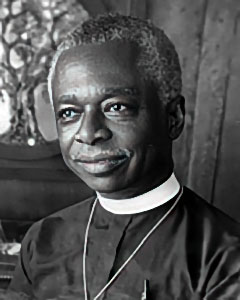
The Rev. Lee Homer Wesley

The Rev. Lee Homer Wesley

The first response in Lutheran Quarterly was by LEE  WESLEY. Board of Parish Education, LCA, Philadelphia, Pa:

I HAVE only one basic reaction to the paper really and that is to endorse it with a resounding AMEN! !! Yea, yea, it is so!! I have two basic critiques : 1. The paper did not make clear the fact that Black Power is a term which is addressed to and therefore belongs exclusively to the black community. It was never really meant for white consumption. The word was born out of bitter and intense struggle and as such represents that struggle. It is a symbol of the fact that we are; it’s an affirmation of our own validity and worth as a corporate person; it’s a call to experience a sense of community which we as black people have never experienced before; it’s a rallying point around which all black people can now assemble in the fight for freedom, justice and equality. Black Power says to us that we are real, that we do count for something and that we must now make our voice heard. When the white man interpreted Black Power in his own terminology as the press did, he did violence both to it and to the black community. It’s just another illustration of what this whole business is all about. He heard a new term used; he didn’t understand it because he really didn’t listen and didn’t try to find out what it was all about. Until this very day he has been reacting to what he thought he heard.

The paper did not make explicit enough, for me at least, the fact that even with all the wonderful things that Black Power will do for blackpeopleand the measure of justice which it will bring about in our nation, it will not solve the “race problem” because the “race problem” is basically a white man’s problem. It is he who fears the “tar brush” and not the other way around; it is he who is afraid that the black man is “out to get him,” and, if given half a chance, will “put the shoe on the other foot,” or to use more familiar language, “will return an eye for an eye and a tooth for a tooth.” Consequently any respect which Black Power will achieve from the white man for the black, will be the respect of power for power and not necessarily that of a person for a person. No one likes to be forced to do anything; no matter how right or compelling the reason may be. People will do if they have to because they have no other choice; but it will always lack something in terms of warmth and depth because it was not done out of free will or the desire to do that which is right.

I suppose what I am trying to say is this: the black community is determined to get its fair share of the American “pie” or die in the attempt. The white community will have to yield that share, either by force or otherwise, or it must destroy the black community. Should it opt in favor of yielding, the ‘level of brotherhood which this country is capable of achieving cannot and will not be attained until the white community both desires and wills to do “right” by its black brothers. The desire to do SD is called REPENTANCE and the will to do so is called LOVE. Now I know these are pretty old-fashioned words, but I also happen to believe that Jesus knew what he was talking about when he used them.

From Professor Stewart’s blog: This is the original position paper  on “Black Power and You” from the council of Holy Family Lutheran Church, Chicago.

You will find three commentary responses to the paper. The first response is by Lee Wesley. The second response is by Massie L. Kennard. The third response is by Richard Stewart.

Symposium on Black Power
Lutheran Quarterly,
May 1968, Vol.XX

A POSITION PAPER WRITTEN BY THE PARISH COUNCIL OF HOLY FAMILY LUTHERAN CHURCH, CHICAGO, ILLINOIS

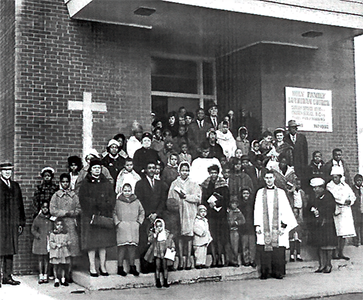
Holy Family Lutheran Church Chicago

Holy Family Lutheran Church, Chicago in teh 1960s

AS WE walk through our neighborhood we are confronted again and again by the slogan “Black Power.” Few buildings have been spared this now popular headline. What does it mean? How should we react to it? Is it good? Will it be the death of us all?

In America today a system of social injustice presents itself, which makes an individual’s attempts at personal goodness irrelevant. If we attempt only to be nice to some one individual whose whole being is twisted by this system, and all of its controlling agencies, our being nice is not of much influence.

“Suppose,” William Lee Miller says, “The Good Samaritan came upon the wounded man and took him to the inn and cared for him, and then the next day found another beaten man at exactly the same place along the road, whom he again cared for. Then suppose that each following day wounded travelers were discovered at the same place along the road. If this went on for weeks, would we not think there was something wrong with the Samaritan’s faith if he never thought to ask who was patrolling that road against bandits?” His own personal goodness would be frustrated by a society which permitted such things to take place, much in the same way ours is when we expect our personal goodness to compete with the society which has and continues to cripple the black man of our land.

We must then find ways to speak to our white brothers of the human race, not to emphasize our separation, but in order to inaugurate reconciliation and a common life together.

Perhaps the greatest distortion facing us today in this land is the gross imbalance of power and conscience between Blacks and Whites. Because of this imbalance we have been led to believe that Whites are justified in getting what they want through the use of power, but that Black Americans may make their appeals only through conscience. The system has said, “We will give to the Black man when he appeals to us, but the Black man dare not use a power, even though we have told him to pull himself up by his bootstraps.”  The result is the corruption of White power and Black conscience.  It is fair then to say that in Black–White confrontation we find conscience-less power of white men meeting the power-less conscience of the Black man. This clash threatens to break out into civil war, which could very well destroy the nation. Integration, therefore, has failed as a means of achieving peace among American citizens. Without the capacity to participate with power in the life of America Black men cannot take themselves seriously as human beings who are creatures of God. Unless we see ourselves as human beings in whom God’s power operates, and unless white America recognizes us as people whose level can be measured in power which is equal to that of White American citizens, honest racial integration is an impossibility.

Our definition of Black Power then is not White hatred, but rather a necessary means to place us in an equal position with White America. Then and only then can the goal of an integrated common life under God be attained.

Some people have complained that Black Power will lead to open conflict between White and Black America, and that if this were to happen the Black minority would be annihilated. We feel this is a total misunderstanding of the intent and purpose of Black Power. Let us also say that if violence were to break out, this resulting violence would be a natural outgrowth of the mind set of a White system which has again and again resorted to violence as a solution. We must further add that any resulting violence could never do the amount of de-humanization, personality damage, pain, and sorrow, which have resulted from the racist practices of our society.

All power comes from God and we as creatures of God have been given the task as God’s Church of using God’s created power to serve human freedom. Man has always had the God-given task of insuring man’s freedom by using the things of God, which God places at his disposal. Power is one of these God-given things. As we view it the real problem is not the anguished
cry for black power, but our own failure to use power to relieve injustice and create equality.

It is for this reason that love can never be properly set in opposition to power, for as our Lord and St. Paul remind us, love is that force which is to control all, including power. We then, as the Church can only oppose the misuse of power and the longer we take to recognize this most basic distinction, the longer present injustices will continue.

In the past our country has asked us as Black people to fight for opportunity as individuals, when what we needed to do was to move as a group for all Black people, as other ethnic groups have done in our land. Now that we attempt to move through Black Power, White fear rises on every.side.

What we seek today then under the title of Black Power is organizational strength. It is not something out in the streets to be fought over. It is what we already are, creatures of God. No longer must we think of ourselves as inferior, for we hate inferiority, and if we are filled with self-hatred we will project that hatred out upon others and not respect them. Striking
out at everything White in the name of Black Power will simply cause us to fall into a racism of our own. Only the creation of such power as it operates under the control of the love of Jesus Christ will be able to change our feelings about ourselves and others. Black Power is not a dirty thing nor a slogan to be feared.

In America today where justice is thwarted by an illegitimate use of power, the Church, God’s own people, must allow God to throw her reclessly and wholeheartedly into a struggle which will create a power for maintaining justice. We believe that the Church has no other alternative at this time than to work as God’s tool for the establishment of Black Power.

Written and unanimously adopted by the Parish Council of Holy Family Lutheran Church on November 25, 1967.

Holy Trinity Lutheran Church was started in 1962 as a mission to the people living in the Cabrini-Green public housing complexes, seeking to empower African-American leadership in our community. Read about the church, started with a simple mission: serve the people in our city. You can download this history published by the church on its 40th anniversary.