Posts filed under: 20th Century

20th Century

From Professor Stewart’s blog: This is in response to the original position paper on “Black Power and You” from the council of Holy Family Lutheran Church, Chicago.

Lutheran Quarterly asked for comments from 3 others for the publication. This response is from Rev. Massey L Kennard, who served director for Minority Concerns of the Division for Mission in North America. The first response is by Lee Wesley. The third response is by Richard Stewart.

A Response from Massie L. Kennard, Lutheran Quarterly, May 1968

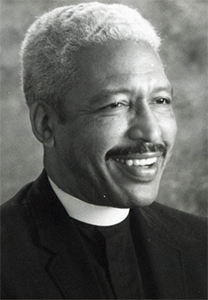
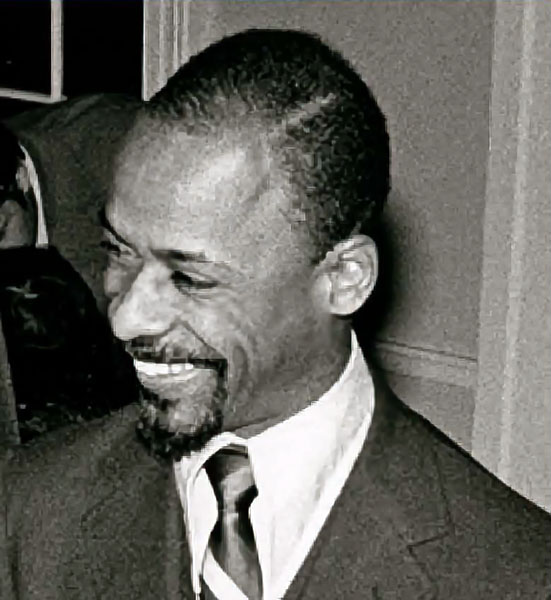
Massie Kennard

Massie Kennard

ONE of the strange enigmas of life for me has been the attitude of many of mwhite brothers and sisters, who profess the Christian faith to be theirs, as regards their black brothers and sisters in America. Fully aware of the answers given to this riddle, namely: it is sociological in nature, or economic Deducational or psychological in nature, I am still bewildered when my white brothers and sisters in Christ persist in their attitudes and actions that are foreign to the attitudes and actions ‘Of Christ, their supposed Lord.

Not until. The riots broke out, which was a manifestation of a hurt building within the hearts of black people in America for years and years and years, and the ensuing report of the President’s Commission on the Causes of Riots, were the covers lifted for the white man and woman to reveal a truth the black man has known since his birth, simply that the white man
thought himself better than the black man. The President’s Commission called it Racism. But, even this revelation does not explain to my satisfaction with the white brother, in Christ, who professes the Christian faith, is part andparcel of this evil. Could it be that Christ is not the Lord of my many white brothers? Could be. I’m inclined strongly to think this to be the case. Because this has been and is still the case, Black Power has been born.

Black Power is not white hatred. It is a necessary means to place Black America in an equal position with white America. Nothing more, nothing less.

Black Power is good. Black Power is needed. Black Power is Christian.

Black Power is good because it gives to the black man a dignity and respect that heretofore has been denied him. Black Power is needed, not to counteract White Power but to help White Power acquire a dignity and respect that the white man ‘has forfeited. Black Power is Christian because it is God-given, just as White Power is God-given.

Black power and You – If you are Christian, maybe it would be wise to restudy the Gospels: Matthew, Mark, Luke, and John and see and understand what Jesus was teaching. Then act accordingly. If you are not Christian the lesson will come harder, but it will come.

Massie L. Kennard
Board of American Missions, LCA
Chicago, IL

From Professor Stewart’s blog: This is in response to the original position paper on “Black Power and You” from the council of Holy Family Lutheran Church, Chicago.

Lutheran Quarterly asked for comments from 3 others for the publication.  The response was from Rev. Lee H. Wesley, who at that time was a staff person for the Board of Parish Education of the LCA [Lutheran Church in America], based in Philadelphia. The second response was by Massie L. Kennard,  and third response was by Richard Stewart.

Symposium on Black Power  
Lutheran Quarterly, May 1968, Vol.XX

II. Responses (to the position paper from Holy Family on Black Power).

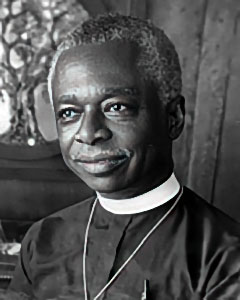
The Rev. Lee Homer Wesley

The Rev. Lee Homer Wesley

The first response in Lutheran Quarterly was by LEE  WESLEY. Board of Parish Education, LCA, Philadelphia, Pa:

I HAVE only one basic reaction to the paper really and that is to endorse it with a resounding AMEN! !! Yea, yea, it is so!! I have two basic critiques : 1. The paper did not make clear the fact that Black Power is a term which is addressed to and therefore belongs exclusively to the black community. It was never really meant for white consumption. The word was born out of bitter and intense struggle and as such represents that struggle. It is a symbol of the fact that we are; it’s an affirmation of our own validity and worth as a corporate person; it’s a call to experience a sense of community which we as black people have never experienced before; it’s a rallying point around which all black people can now assemble in the fight for freedom, justice and equality. Black Power says to us that we are real, that we do count for something and that we must now make our voice heard. When the white man interpreted Black Power in his own terminology as the press did, he did violence both to it and to the black community. It’s just another illustration of what this whole business is all about. He heard a new term used; he didn’t understand it because he really didn’t listen and didn’t try to find out what it was all about. Until this very day he has been reacting to what he thought he heard.

The paper did not make explicit enough, for me at least, the fact that even with all the wonderful things that Black Power will do for blackpeopleand the measure of justice which it will bring about in our nation, it will not solve the “race problem” because the “race problem” is basically a white man’s problem. It is he who fears the “tar brush” and not the other way around; it is he who is afraid that the black man is “out to get him,” and, if given half a chance, will “put the shoe on the other foot,” or to use more familiar language, “will return an eye for an eye and a tooth for a tooth.” Consequently any respect which Black Power will achieve from the white man for the black, will be the respect of power for power and not necessarily that of a person for a person. No one likes to be forced to do anything; no matter how right or compelling the reason may be. People will do if they have to because they have no other choice; but it will always lack something in terms of warmth and depth because it was not done out of free will or the desire to do that which is right.

I suppose what I am trying to say is this: the black community is determined to get its fair share of the American “pie” or die in the attempt. The white community will have to yield that share, either by force or otherwise, or it must destroy the black community. Should it opt in favor of yielding, the ‘level of brotherhood which this country is capable of achieving cannot and will not be attained until the white community both desires and wills to do “right” by its black brothers. The desire to do SD is called REPENTANCE and the will to do so is called LOVE. Now I know these are pretty old-fashioned words, but I also happen to believe that Jesus knew what he was talking about when he used them.

From Professor Stewart’s blog: This is the original position paper  on “Black Power and You” from the council of Holy Family Lutheran Church, Chicago.

You will find three commentary responses to the paper. The first response is by Lee Wesley. The second response is by Massie L. Kennard. The third response is by Richard Stewart.

Symposium on Black Power
Lutheran Quarterly,
May 1968, Vol.XX

A POSITION PAPER WRITTEN BY THE PARISH COUNCIL OF HOLY FAMILY LUTHERAN CHURCH, CHICAGO, ILLINOIS

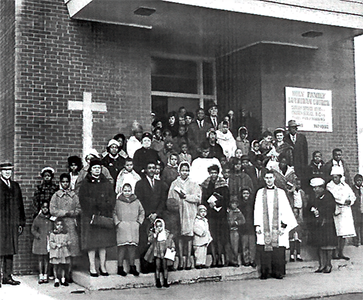
Holy Family Lutheran Church Chicago

Holy Family Lutheran Church, Chicago in teh 1960s

AS WE walk through our neighborhood we are confronted again and again by the slogan “Black Power.” Few buildings have been spared this now popular headline. What does it mean? How should we react to it? Is it good? Will it be the death of us all?

In America today a system of social injustice presents itself, which makes an individual’s attempts at personal goodness irrelevant. If we attempt only to be nice to some one individual whose whole being is twisted by this system, and all of its controlling agencies, our being nice is not of much influence.

“Suppose,” William Lee Miller says, “The Good Samaritan came upon the wounded man and took him to the inn and cared for him, and then the next day found another beaten man at exactly the same place along the road, whom he again cared for. Then suppose that each following day wounded travelers were discovered at the same place along the road. If this went on for weeks, would we not think there was something wrong with the Samaritan’s faith if he never thought to ask who was patrolling that road against bandits?” His own personal goodness would be frustrated by a society which permitted such things to take place, much in the same way ours is when we expect our personal goodness to compete with the society which has and continues to cripple the black man of our land.

We must then find ways to speak to our white brothers of the human race, not to emphasize our separation, but in order to inaugurate reconciliation and a common life together.

Perhaps the greatest distortion facing us today in this land is the gross imbalance of power and conscience between Blacks and Whites. Because of this imbalance we have been led to believe that Whites are justified in getting what they want through the use of power, but that Black Americans may make their appeals only through conscience. The system has said, “We will give to the Black man when he appeals to us, but the Black man dare not use a power, even though we have told him to pull himself up by his bootstraps.”  The result is the corruption of White power and Black conscience.  It is fair then to say that in Black–White confrontation we find conscience-less power of white men meeting the power-less conscience of the Black man. This clash threatens to break out into civil war, which could very well destroy the nation. Integration, therefore, has failed as a means of achieving peace among American citizens. Without the capacity to participate with power in the life of America Black men cannot take themselves seriously as human beings who are creatures of God. Unless we see ourselves as human beings in whom God’s power operates, and unless white America recognizes us as people whose level can be measured in power which is equal to that of White American citizens, honest racial integration is an impossibility.

Our definition of Black Power then is not White hatred, but rather a necessary means to place us in an equal position with White America. Then and only then can the goal of an integrated common life under God be attained.

Some people have complained that Black Power will lead to open conflict between White and Black America, and that if this were to happen the Black minority would be annihilated. We feel this is a total misunderstanding of the intent and purpose of Black Power. Let us also say that if violence were to break out, this resulting violence would be a natural outgrowth of the mind set of a White system which has again and again resorted to violence as a solution. We must further add that any resulting violence could never do the amount of de-humanization, personality damage, pain, and sorrow, which have resulted from the racist practices of our society.

All power comes from God and we as creatures of God have been given the task as God’s Church of using God’s created power to serve human freedom. Man has always had the God-given task of insuring man’s freedom by using the things of God, which God places at his disposal. Power is one of these God-given things. As we view it the real problem is not the anguished
cry for black power, but our own failure to use power to relieve injustice and create equality.

It is for this reason that love can never be properly set in opposition to power, for as our Lord and St. Paul remind us, love is that force which is to control all, including power. We then, as the Church can only oppose the misuse of power and the longer we take to recognize this most basic distinction, the longer present injustices will continue.

In the past our country has asked us as Black people to fight for opportunity as individuals, when what we needed to do was to move as a group for all Black people, as other ethnic groups have done in our land. Now that we attempt to move through Black Power, White fear rises on every.side.

What we seek today then under the title of Black Power is organizational strength. It is not something out in the streets to be fought over. It is what we already are, creatures of God. No longer must we think of ourselves as inferior, for we hate inferiority, and if we are filled with self-hatred we will project that hatred out upon others and not respect them. Striking
out at everything White in the name of Black Power will simply cause us to fall into a racism of our own. Only the creation of such power as it operates under the control of the love of Jesus Christ will be able to change our feelings about ourselves and others. Black Power is not a dirty thing nor a slogan to be feared.

In America today where justice is thwarted by an illegitimate use of power, the Church, God’s own people, must allow God to throw her reclessly and wholeheartedly into a struggle which will create a power for maintaining justice. We believe that the Church has no other alternative at this time than to work as God’s tool for the establishment of Black Power.

Written and unanimously adopted by the Parish Council of Holy Family Lutheran Church on November 25, 1967.

Holy Trinity Lutheran Church was started in 1962 as a mission to the people living in the Cabrini-Green public housing complexes, seeking to empower African-American leadership in our community. Read about the church, started with a simple mission: serve the people in our city. You can download this history published by the church on its 40th anniversary.

“PRACTICAL PROBLEMS OF NEGRO CLERGY
AND CHURCH OFFICIALS – TWO VIEWS”
By ROBBIN WILEY SKYLES

From Professor Stewart:

I never got an oral interview with Pastor Robbin Skyles,  I sat in his living room back in late 70’s and as I started the tape recorder, this is what I heard, “Boy, turn that machine off and lets talk.” as he reached to unplug it.  He knew what he wanted to say and said it in any forum.  The consultation had nearly 70 participants representing various offices of the Lutheran Church in America,  with the closing speaker being Church President, Rev. Dr. Franklin Clark Fry called by TIME Magazine, ‘Mr. Protestant.”   I was in my 2nd year of seminary

Pastor Robbin Skyles addressed the September 21-23, 1967 CONSULTATION ON RACE, Pittsburgh, PA

This was given as a portion of ‘The Report of the Consultation called by the Coordinating Committee on Race Relations Lutheran Church in America’

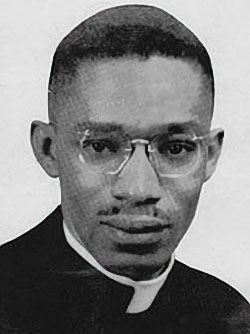
Robbin Wiley Skyles

Pastor Robbin Wiley Skyles

VI. “PRACTICAL PROBLEMS OF NEGRO CLERGY AND CHURCH OFFICIALS – TWO VIEWS”

Speech by Pastor Robbin Skyles

Mr. President, members of the Lutheran clergy the task that I have this afternoon is one in which I must tell you the practical problems which we Negro clergymen have. We’re not particularly mad at anybody but a number of these problems are just problems and they’re going to have to be resolved in some sort of way.

The problem of the Negro pastor in the Lutheran Church in a large sense is an unhappy one because they are faced with inequities in almost every effort, even though the church is making a heroic effort to correct some of the wrongs of yesteryear.

The history of racial separation in the Lutheran Church goes back to 1827. In that year the North Carolina Synod recognized that Negroes were not receiving their riches in Christ. They therefore organized the Alpha Synod composed of Negro pastors and deaconesses. The sole responsibility was to Negroes of that area. They got a number of young Negro men and women together. They educated them, then they were ordained as pastors and also consecrated as deaconesses. They were organized into what was known then as the Alpha Synod and they rested their doctrine on United Lutheran Church stuff. They began to do a tremendous work in that area. Meanwhile the Missouri Synod likewise began its work among Negroes in 1859. Now before the Civil War, Negroes and masters were segregated but they could at least worship together in the same church; the masters would sit on the first floor, and the Negroes would sit in the gallery, and if the church did not have a gallery the Negroes would occupy the last three or four rows in the church. Then after Lincoln freed the slaves and told them they were equal, this situation became untenable and the Negroes had to fend for themselves.

It was considered an unheard of thing for a white man to teach a Negro anything at all, and any Negro who dared to learn anything at that time was beaten within an inch of his life; and any white man who dared to teach a Negro anything was ostracized and so the Alpha Synod could not continue its work among the Negroes because in a large sense it could not get men and women who could continue the work. They could not get men and women to replace those who were dying out. So these missions that had been established by the Alpha Synod fell to the Missouri Synod. And so from about 1865 to 1920 all of the Negro work was done by the Missouri Synod.

The ULCA, one of our predecessor bodies, continued its work among Negroes to a limited degree. There are notes from the biennial reports of the ULCA stating that they were interested in doing something for the uplifting of Negroes to try to bring them their riches in Christ. If you were to go into the minutes of the ULCA, you would see copies of letters written by Dr. Long and Dr. Bagger and some of the other great men of that era, in which they go on to say that they wish they could help to establish preaching points at various places in the South, but at that time the man who was the head of the Board of American Missions said he did not want to have Negroes segregated in the church and for that reason he would not establish any new missions because he was afraid they would become segregated.

Now these reports in the biennial reports go on to say that the ULCA wanted to and did give two or three thousand dollars per year to the American Lutheran Church to further the work among Negro people. They see as artificial “any effort to improve the lot of the Negro people in the Lutheran Church,” until the time of the Supreme Court decision on segregation in 1954. Now since that time the church has made some efforts which leaves much to be desired on behalf of the Negro clergy and laity.

A few accusations have been made against the performance of the Negro clergy by those who don’t know, by those who have deliberately turned away from the historical background of the present situation. Certain stock excuses are offered for the limited opportunities which the church provides to Negro clergymen. It is said that the Negroes are a financial liability, that they are a risk in the area of stewardship and that the Negro churches are not as productive and as dynamic as the white churches and that the Negro clergymen exhibit poor leadership qualities.

If this is the type of thinking in the church today, then it is the same kind of racial thinking which characterizes American society in general. All Negro clergymen and their people are placed in the same category and are psychologically compartmentalized in all decisions and promotions and assignments by the church hierarchy. One cannot justify this racial policy which excludes even the exceptionally qualified Negro clergymen and more important, a human being, without regard to his skin pigmentation.

First of all let’s turn to this charge of poor production by the Negro clergymen. In a large way he is limited by the psychology of Negro religious experience and religious goals. This is really to say the social and economic history of American society. One goal in the worship service has been the catharsis of the oppression and humiliation which has been visited upon him by a racist society. The Lutheran Church format is not fundamentally conducive to this emotional catharsis.

There is also a basic inequality of the instruments and resources available to the Negro and white clergy. In some instances the white clergy receives deaconesses, interns, and paid help. In some cases the Negro pastors have left the churches and gone on to other places and the budgets have been pushed up tremendously when white pastors came into these churches. The Negro pastor cannot look forward to the denominational assistance on a sustained year-round basis. The white pastor can go into a slum or ghetto situation and is guaranteed the psychological freedom to invest his total creative and executive power in church leadership because he is effectively insulated and isolated from the destructive anxiety and the destructive impact of the ghetto conditions. His tenure is brief and is accompanied by the knowledge that he can leave by request. He knows he can put his name on the transfer list and that he will be out of that parish within 90 days. This is not the case with the Negro pastor. The white pastor can press the panic button at any time and like a simulated flight of an artificial space craft he can stop this simulated flight at any time and step safely out on the ground. The Negro pastors flight is for real, his capsule is really in motion and really in space. To step away would be disastrous.

We have already mentioned the sermon format which has its roots in slavery and Jim Crow oppression and is designed to lighten and cleanse the hearers, the emotions of the hearers. Of great importance is the singing which unites the congregation in the fellowship which has its own unique overtones born of suffering and generations of prayer. Now the songs of European Christianity often cannot be sung by Negroes and consequently have no religious or psychological significance for him.

Also many times our people go into a congregation and the pastor puts his hands on their heads, and he says, “Father in Heaven, for Jesus sake renew the gift of the Holy Spirit and strengthen thee in faith and growth in grace.” Give release in life. And this is supposed to change his whole community. He was supposed to forget the songs which Mrs. Hedgemann spoke of this morning and which Mr. Michaux spoke of, he is supposed to toss all of that down the drain. He is a new person now, no longer can he sing “I just got over, I am tramping up the King’s Highway.”

Perhaps you have not understood what he meant by singing “I just got over.” Think about an individual who lives on just a few dollars a week and he is just barely making it. He comes out within pennies of having enough money for his rent and for his food, and that individual can sing from his heart that “I just got over” and the Lord is taking his hand and leading him on out of one crisis and putting his feet on higher ground. It is impossible for us as a group’ of people to be excited about a song such as Du Heiliger Geist or Du Frommer Gott or 0 Gott Sei Dank. They are beautiful songs and chorales but you-just can’t lose yourself in those songs because we don’t have that heritage of four hundred fifty years. We can’t point toward Scandinavian or Germanic background and say that these things have come down to us from the greatest of antiquities. So you see we have a problem here with the singing that is produced in our churches. The songs of classical Christianity cannot be sung by Negroes and consequently they have no religious or psychological significance. They involve them yes.

The same situation that is briefly sketched here is mentioned to explain some of the differences that exist between Negro and white Lutheran parishes. Consequently any evaluation of stewardship that is practiced in the Negro Lutheran Churches must take into consideration the practices mentioned. Specifically, the church tends to draw upon the upper Negro middle-class social economic spectrum. Those who may no longer have any desperate need for the catharsis and the church oriented ego satisfaction. I would say they have another type of satisfaction which they also get and that is that there are those who feel that if they can have a white pastor this makes them worth more not worth less and I would say that this is in a sense the way they have their catharsis. Basically, along with this practice the numbers are small and their growth is relatively slow. However, proportionately the Negro Lutheran Church does as well as its white counterpart. Reflections upon these facts in our society will lead to a better understanding of how a Lutheran Church sometimes ceases to meet its allocations and becomes a supported mission outpost when there is a racial change in the community.

If the Negro was given the same tools and resources as his white brother, he would be able to produce in a comparable manner considering the social economic attainments of the people whom he serves. Now if we glance at the attainments of the Negro clergy it will highlight the limitations of which he must always be conscious. There are only sixteen Negro pastors in the Lutheran Church on the American continent and at least fourteen serve in parishes. In thirty-two synods of the Lutheran Church in America there are no Negroes in the power structure except the Dean of South Chicagoland District of the Illinois Synod, and there is one Negro layman on the Executive Council of the church. There are no Negro pastors or laymen teaching in any of the seminaries or colleges of the LCA, to my knowledge. None of our Negro clergy are ever asked to speak at collegiate graduations or as chaplains of the church at large for a general convention and only recently has one Negro pastor been asked to be the chaplain at a synod convention.

Now we have some Negro pastors who have served in the church for over twenty years and have done a tremendous job of pioneering. You know we used to go to the “last suppers,” I used to call them; the synod presidents would call up all the mission pastors and there you would have to sit and listen as he tells the story of these tremendous pastors who have gone out to the suburbs and have been doing a tremendous job. As a matter of fact they didn’t build the church yesterday. They took the bars down and then had to hurry up and get out of the way because people were running over them. But they never took into account that the

Negro pastors were walking up and down the street figuratively with two sticks of dynamite in each hand trying his best to blast his way into somebody’s house to get them to come to church. But we were never given any kind of credit at all for anything we ever did and none of us yet has received any honorary degrees from any of our colleges or seminaries.

The Negro clergymen has little mobility and that mobility which he does have is horizontal from ghetto to ghetto, from Watts to the Hough District, from Harlem to Brownsville and always invariably into dying areas. Like pouring brine into the open wounds, the Negro pastor knows that he will not be called into a flourishing parish even when it has become all Negro. He knows that such a parish will be given to a white man. The Negro clergyman knows he will never go to such a prosperous parish as St. Johns, Allentown, or Trinity in New York, and he knows that it isn’t likely that he will be called to be the assistant to the president of a synod. He also knows that he will not be called to a church which is highly organized and has maintained its position over a long period of time. The church has consistently excluded, either by intention or oversight, the Negro or other non-white persons from consideration for election to be pastors or assistants in white or predominantly white parishes.

Now theoretically we have the same opportunities and privileges as white pastors to be selected as pastors of congregations; sort of like we have the privilege of being selected to be the president of the United States. How then does the Negro pastor not get the recommendation of the synod president as required in the constitution of the synod? If he does not, he cannot entertain the call. What then is the picture that the Lutheran Church presents to the perspective of the practicing Negro clergyman when he has no mobility or real acceptance as a human being? He sees this approved in the Christian church. This policy in practice is just as racist as anything in the American society. He sees a church which in effect denies open occupancy of pulpits.

This does not necessarily mean that every Negro pastor wants to serve a while congregation. He doesn’t. It does mean that the freedom of selection should be a part of church policy even to the point of hierarchical positions for those who are qualified. I don’t believe that Negroes should e given the position just because he is a Negro. I do not believe in professional Negroism. When the church can present a better picture of an all-inclusive ministry to the Negro clergy, vertical or horizontal, then the Negro pastor will feel encouraged to do his work, but mor importantly, he will go out and see what he can do to try and develop an indigenous ministry for the Negro churches.

It was MY privilege to be asked by the Lutheran School of Theology of Chicago to go out and see if we could find young men who wanted to study for the ministry. I went to Howard University, Morgan College, to Central States College, to Lincoln University so see if we could get young men to come into the ministry to serve this great need which we have for Negro clergy of the Lutheran Church.

The first question which they asked me was this: What chance do we have for advancement? After we have done our work, do we have the same privileges and rights as any other pastor? I said to them, “of course you do, look at me. I am the dean of the church. As you see I am in an all white area and this can happen to you.” But my takers were very few. I got two or three nibbles but I think they were scared off not because the didn’t want to come and do the work, but because we are now in 1967, nearly 1968. and things are moving rapidly now. The church is going to have to reset its values and begin to consider men on the basis of their ability, I hope.

It’s Not Over In Destroy’t

From Professor Stewart: Dr. Featherstone, was an intern at my home Lutheran Church, Ascension, Toledo, as a student looking at grad schools,I visited him, while he lived in Cambridge,MA, so I have known him and his reluctance to be interviewed by me, so going back into his writings, has affirmed my impressions of WHO HE IS… The pages shared here are from the Consultation on Race, LCA, Pittsburgh, PA Sept. 21-23, 1967. Pittsburgh, PA.

It’s Not Over In Destroy’t
The Rev. Rudolph Featherstone, Pastor, Good Shepherd Lutheran Church, Detroit

The Rev. Dr. Rudolph Featherstone

The Rev. Dr. Rudolph Featherstone

One of the things I took from Destroy’t, one of the things that impressed me when I first came to Destroy’t was that, over and over again I heard the comment that Detroit is a model city, that we have no problems. And it bothered me so much that this was the type of thing reflected in the city. It seems to me that we are aware of the fact that we could look at the riot in three different perspectives. I don’t have time to develop this in seven minutes, and I’m not going to try.

First of all we need to talk in terms of preventative medicine that seeks to deal with the urban crisis that exists in our nation today.

Secondly we need to talk about where are we now, and thirdly we need to talk in terms of where we need to go in terms of future strategy. I’m going to shift from all of that because I don’t have time to even talk about it.

Destroy’t, well it seems to me that the Negro poet of yesteryear, Paul Lawrence Dunbar, depicted what are the causes of riots when he said:

“A crust of bread, and a corner to sleep in,
A minute to smile and an hour to weep in,
A pint of joy to a peck of trouble,
And never a laugh but the moans come double;
And that’s life!”

Black life! Black life in the ghetto! There is the cause of your riots.

Four years ago the author of a book that everybody who is knowledgeable, and readable and intelligent read, James Baldwin wrote: It is God’s admonition to Noah, “God gave Noah the rainbow sign. No more water, the fire next time.”

Well, baby, we got the fire.

We got the fire, and we’re going to have the fire, and it’s not over in Destroy’t, by any means.

One of the things, that we as the church, it seems to me, and I’m talking a bit ahead of myself, now, one of the things we need to think about is that riots are not merely of local or provincial concern, but they are national, and if the church is going to think about riots and what happens and what does not happen, it needs to think in terms of what do we do nationally as far as strategy is concerned.

I was interested in the last issue of Interchange, and I was interested because it bugged me a little bit. You know LCUSA it seems, if this can be believed, has been designated as the agency, which basically is going to handle the response of the Lutheran Church across the board in riot situations. They are going to determine financial resources available in crisis situations. They are going to serve as coordinators of information in these situations. I wonder how they are going to do that. I’d like to find that out. And they are going to provide staff services in the field in one of these periods. And I wonder where staff are going to be, whether they are going to be over there where things are happening. You know a funny thing happened during Destroy’t down on 12th Street, and perhaps this is one of the things the church needs to understand, down on 12 Street a white man couldn’t walk.

Now, we are talking about–last night I heard something of the theme of black and white together. What they used to talk about when we sang “we shall overcome.” If the church is going to understand something of its role in a riot situation it has got to be willing to trust and to entrust to many of its black brothers the responsibility for whatever involvement the church is going to have. So long as, we’ve got to press the point, we have got to reach the understanding that in certain areas, like in Destroy’t, if you were white you were dead, unless you came through it in a car, but if you were on the street your life wasn’t worth a plugged nickel. Please understand that because I think it is very important.

What are some of the things that were done in the Destroy’t situation? Let me name just a few. We had a call from the assistant to the president of the Michigan Synod. We had a call
from Herluf Jensen from the Board of Social Ministry relative to my own person, relative to my own participation in what was going on, what was happening. We had some offerings that were received by the Lutheran Church, Michigan Synod. A letter that went out from the president of the synod, Dr. Madsen, asking all the congregations to send him money as a contribution to the synod fund.

It was interesting how our congregation responded. We responded in a manner that, in making the appeal I personally, since I am involved in another organization, made an appeal but I made an appeal directly for the other organization in order that the money might not be channeled in some other areas. And the money that our congregation did respond with the bulk of its money going to the organization that I had asked them to respond to.

But there was the creation of an Interfaith Emergency Committee which sort of talks in terms of that we are going to attack this problem, (is my time over yet, gee, one minute) if we are going to attack this problem on its right level, and in its right perspective, we have to talk about ecumenics.

Got to forget about talking about just Lutherans doing what is necessary together, we have got to begin to talk about ecumenics involving themselves in this whole problem of riots and what happens and what does not happen. One of the things we are also going to have to talk about, as I saw so many, and I say this in all candor, I saw so many of my good white brothers relieving their guilt consciences, when they were able to see the long black lines that were standing there at our office downtown when they brought in the bread and their milk, and their canned goods – there you saw the system in all of its brilliance, and wonder, and splendor. Somehow or another we have to move beyond the immediacy of the welfare type of thinking, to where do we go from here, towards new and constructive programs.

I don’t have time to get into all this, but, and these are just some thoughts about the riot, some initial reactions. And Icould go into them for quite some time.

Question to Pastor Featherstone from Pastor Carter: Do you feel that the church is geared for an effective job at the present time, which time is very short?

Featherstone: I got a long-distance call while the riot was going on, and I can’t tell you from whom it came, and he said, “baby, I understand you have a fire going on out there.” And I said, “yes, we got a fire going,” and he said, “well maybe if we burn about five or six billion more dollars of buildings maybe they will hear what we are saying.”

In answer to your question specifically, I’m alarmed and I’m disturbed and I’m alarmed to where the guts on my inside are hurting, because it seems to me again that our structures and all our processes are not set up to deal with that fire next time. And if I could make a plea, my plea would be at this moment, that it is really later than all of us think. It is so late that many of us, don’t know what the future holds. When Dr. Michaux talked in terms of the bomb and things of that nature, he wasn’t joking. And as Pastor Carter says there is a real tension here, and I don’t think my white brothers understand what we are trying to say here. That the tension is so great, the fire so close, that not only dates have been set, but targets also have been picked. I think we need to be cognizant of this, and that the church needs to be about its redemptive and reconciliation efforts. I hope sincerely that this conference talks in terms of strategy, and not only talking, but that we move rapidly towards implementation. At this point, Pastor Carter, I am somewhat fearful, but I have hope, and I think my church won’t disappoint me.